
What is lipodermatosclerosis? Your guide to symptoms and support
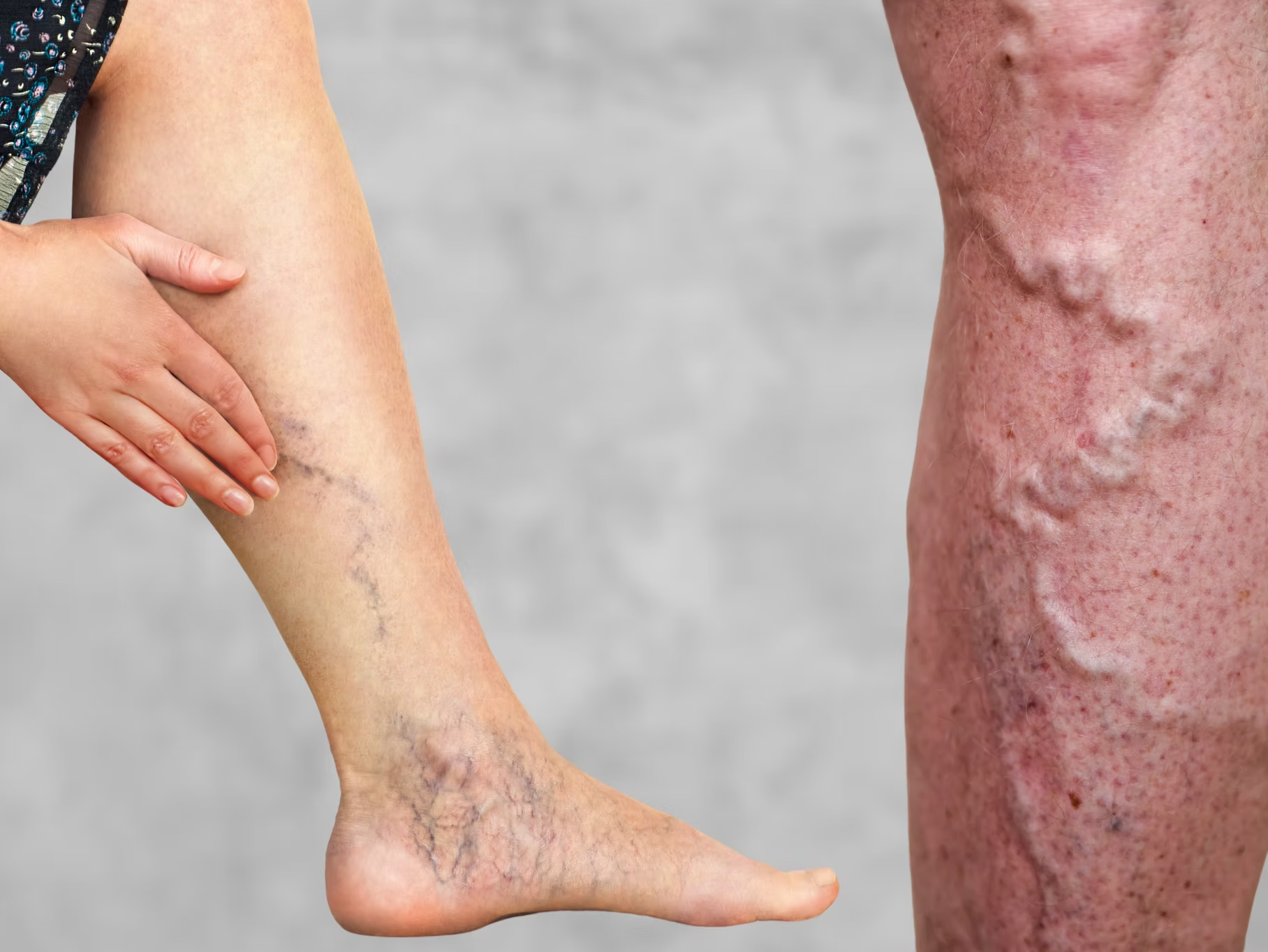
Lipodermatosclerosis is a long-term skin condition that usually affects your lower legs. It happens when poor blood flow and increased pressure in your leg veins trigger inflammation. This can make your skin, and the layer of fat just beneath, feel painful, swollen, hard, or change colour.
It can be easier to understand the name if you break it down into three parts. Lipo means fat, dermato means skin, and sclerosis means hardening. But you might also hear doctors call it sclerosing panniculitis or hypodermitis sclerodermiformis.
You can’t cure lipodermatosclerosis completely, but there are lots of things you can do to ease your symptoms and slow the condition down.
Here we’ll explain the signs and symptoms to watch for, practical ways to manage your symptoms, and when to see a vascular specialist for support.
What are the symptoms of lipodermatosclerosis?
In the early stages, lipodermatosclerosis symptoms can look similar to cellulitis (a skin infection). It often affects the front or inside of your lower leg. You might find that the area above your ankle is:
- red
- painful
- mildly swollen
- tender to touch
- warm
- hard
- itchy
- achy
As lipodermatosclerosis gets worse, ongoing inflammation can make your skin:
- thicker and harder (fibrosis)
- a dark red, brown or purple colour
- painful and tight, especially after standing or walking
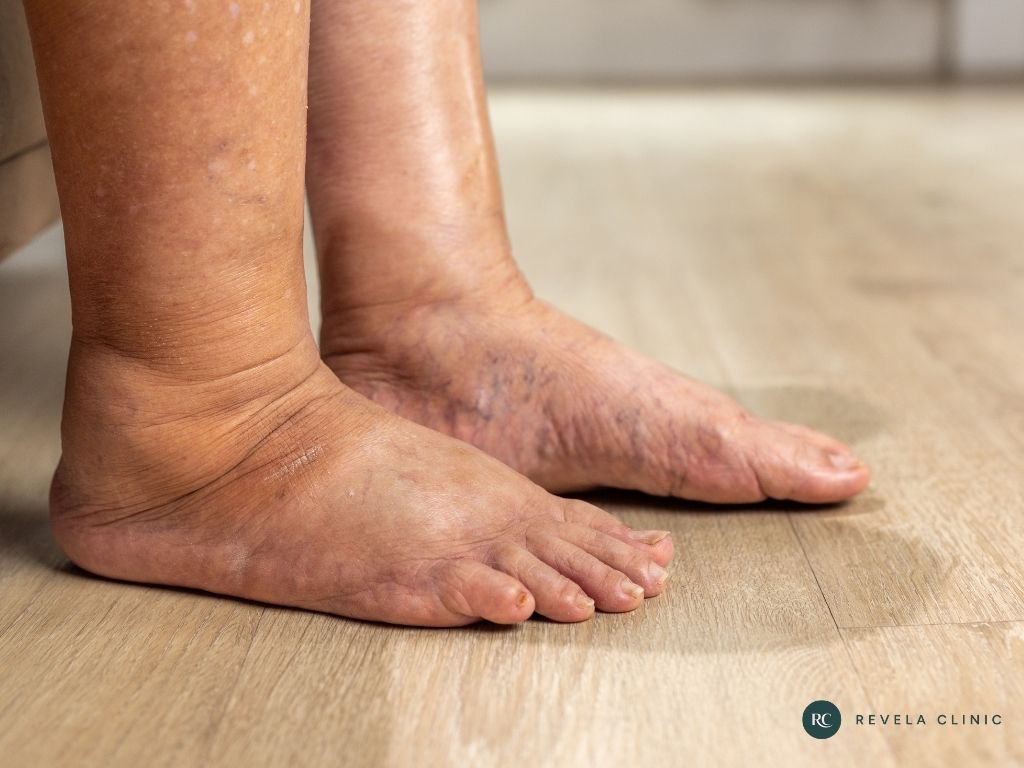
- swollen
- dry and itchy
- fragile, which can lead to leg ulcers if left untreated
The shape of your leg may also change over time. Your calf and foot can look swollen, while the skin around your ankle becomes tight and narrow. This is sometimes described as an upside-down champagne bottle or bowling pin shape.
What is lipodermatosclerosis caused by?
Lipodermatosclerosis starts when the veins in your legs aren’t working properly, or your calf muscle isn’t pumping blood as well as it should. This is known as venous insufficiency.
As a result, blood pools above your ankles instead of flowing back up to your heart. Pressure then builds up in your leg veins, causing fluid to leak out and trigger inflammation in your skin. Over time, this damages your skin and makes the fat underneath it thicken and harden.
You’re more likely to develop lipodermatosclerosis if you:
- are older
- are overweight or obese
- smoke
- are female
- have had deep vein thrombosis (DVT)
- have a family history of vein conditions
- sit or stand for long periods of time
- don’t exercise regularly
How is lipodermatosclerosis diagnosed?
If you’re concerned about your legs, make an appointment to see your doctor or a vascular specialist. They’ll ask about your symptoms and medical history and carry out a thorough examination of your skin and legs.
In many cases, lipodermatosclerosis can be diagnosed with a physical exam alone. Sometimes, your specialist might also recommend a duplex ultrasound. This is a scan that uses sound waves to create images of the veins in your legs. It helps your specialist see how well blood is flowing in your legs and whether your valves are weak or leaking. This can help your specialist find out exactly which veins are causing your problems and plan the best treatment for you.
Can you get rid of lipodermatosclerosis?
You can’t get rid of lipodermatosclerosis completely, but there are things you can do to ease your symptoms and stop it getting worse.
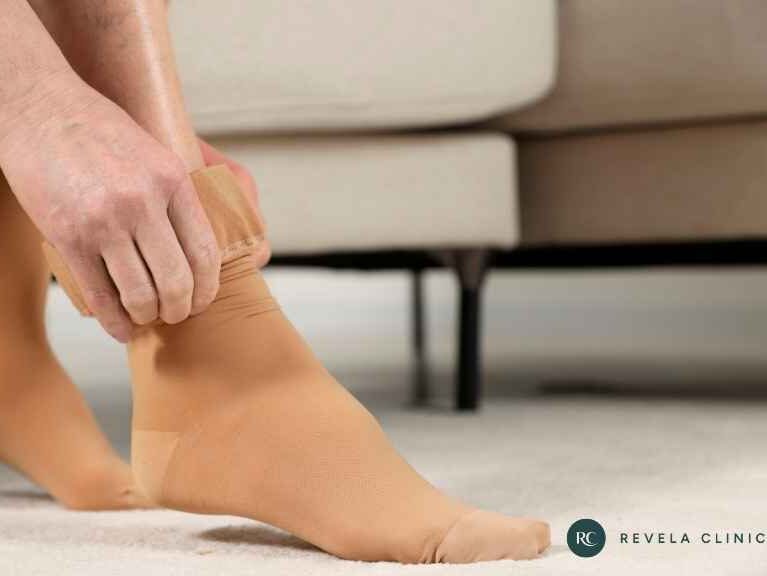
- Wear compression socks or stockings for lipodermatosclerosis to improve your blood flow and reduce pain, pressure and swelling in your legs.
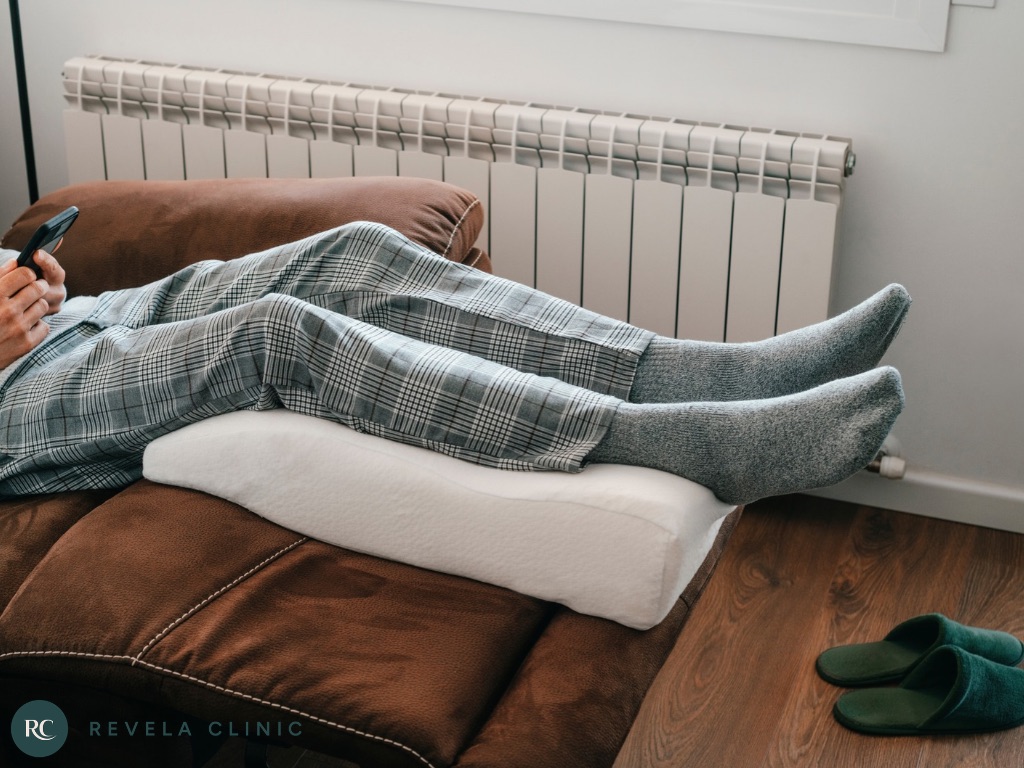
- Elevate your legs above the level of your heart regularly, which can help to stop blood pooling in your lower legs.
- Get regular exercise to help your calf muscles pump blood back towards your heart and reduce swelling, pain and pressure.
- Lose weight if you need to, because maintaining a healthy weight can help to reduce pressure on your lower body and veins.
- Avoid sitting or standing in the same place for long periods of time, which can increase the pressure in your legs.
- Try not to injure your skin, as it can lead to venous ulcers.
What are the medical treatments for lipodermatosclerosis?
If self-help measures aren’t enough to ease your symptoms, your doctor might prescribe pain relief or creams to help, such as:
- an emollient that you regularly apply to your skin to help moisturise it
- a steroid cream to help if you have a flare up of venous eczema
- anti-inflammatory medication to improve your pain
Sometimes, your doctor may refer you to a vascular specialist. Or you can book an appointment directly with a private vascular consultant if you prefer. They might recommend minor procedures to treat your underlying vein disease and ease your symptoms, such as the following.
- Radiofrequency ablation. This is a minimally invasive procedure that uses radiofrequency to heat and seal a faulty vein. This causes it to collapse, which enables blood to reroute through your heathy veins and reduce pressure in your lower legs.
- Sclerotherapy. This is a minor procedure that’s often used to treat veins that are small, twisted or sit close to the surface of your skin. Your consultant injects a liquid or foam into your faulty veins, so it closes and is absorbed by your body.
Get specialist treatment for lipodermatosclerosis
Lipodermatosclerosis is a sign that something is wrong with the veins in your legs, and treating the cause early can help stop it getting worse. At Revela Clinic, our vascular specialists can find out what’s behind your symptoms with a duplex ultrasound scan, then talk you through your options and create a plan that suits you. We’ll also follow up with you, so you’re supported every step of the way.

Mr. Ahmed Shalan
Consultant Vascular and Endovascular Surgeon MBBCh, MRCS, ChM, FRCS.
At Revela Clinic we take time to understand your goals, explain every step, and ensure your comfort from consultation to recovery.
Book consultationRelated articles
We are here to help
Please fill out the form below and a member of our team will be in touch as soon as possible.