
Radiofrequency Ablation
Modern, Minimally Invasive Treatment for Varicose Veins

What Is Radiofrequency Ablation?
Radiofrequency Ablation (RFA) is a minimally invasive procedure widely considered the “gold standard” treatment for varicose veins, recommended under guidelines such as those from NICE and by expert vascular societies.
Rather than surgically removing veins, RFA uses radiofrequency energy to heat and seal off diseased superficial leg veins (for example the Great Saphenous Vein, Short Saphenous Vein or other refluxing thigh veins). () Once sealed, the treated vein collapses and over time is absorbed by the body; blood is redirected through nearby healthy veins. ()
Why RFA Is Preferred — Benefits & Advantages
- Minimally invasive: Only a tiny puncture or small cut is needed — no major groin surgery. This reduces scarring, infection risk, and wound-healing problems
- Faster recovery: Most patients go home on the same day, and can resume many normal activities quickly.
- Less pain and bruising than traditional vein “stripping” surgery. In studies reviewed by NICE, RFA patients reported less pain and required fewer analgesics than those undergoing stripping.
- High success rate: Immediate occlusion (closure) of treated veins reported in 90–100% of cases.
- Improved appearance and reduced symptoms: Varicose veins shrink or disappear over time, and many patients observe reduction in symptoms like heaviness, swelling, or aching
How the Procedure Is Performed
- RFA is typically done under local anaesthetic, meaning the patient remains awake but the treatment area is numbed — avoiding risks and recovery issues associated with general anaesthetic. ()
- Using an ultrasound-guided technique, a thin catheter is inserted into the target vein through a small puncture (often near the knee or calf) rather than large incisions.
- The radiofrequency probe delivers heat to the vein wall. as the catheter is slowly withdrawn at a controlled rate to ensure even closure.
- The procedure generally takes about 45–60 minutes per leg, and is performed on an outpatient ( Walk in, Walk out ) basis.
Because the treated veins are part of the superficial venous system, and not the deep venous network, RFA can safely target the diseased veins without compromising deep-vein function when done correctly.
After the Procedure — Recovery & Aftercare
- Patients can typically walk and move around soon after RFA — walking immediately and regularly post-procedure improves blood circulation and reduces risk of complications.
- Post operative bandage is fitted on the treated leg. This helps reduce swelling, bruising, and supports healing.
- Return to normal light activities is often possible within a day or two; more vigorous activities (heavy lifting, intense sports) are typically postponed for 1–2 weeks or as advised by your clinician.
- A follow-up (clinical review) may be scheduled to confirm the vein remains closed and to assess healing.
Risks & Potential Complications
Like any medical procedure, RFA carries some risks. While generally safe, it is important that patients are aware of possible side-effects or complications:
- Common after-effects: mild pain, bruising, tightness or “pulling” sensation along the treated vein, swelling, or lumpiness — usually settling in days to weeks.
- More rarely: skin changes/discolouration, inflammation of superficial veins (phlebitis), paraesthesia (temporary nerve numbness or tingling), or skin burns (especially in areas treated below the knee).
- Risk of blood clot formation (such as deep vein thrombosis, DVT) — though uncommon (reported in around 1% of patients in some studies) when proper prophylaxis and aftercare are followed.
- Possibility of re-canalisation (the treated vein reopening) or development of new varicose veins over time. Long-term data are more limited compared to short-term results.
Because of these risks — especially in individuals with risk factors for thrombosis (e.g. high BMI, past history of DVT, hormonal therapy, family history) — careful assessment and (when indicated) extended prophylaxis against clot formation may be advised.
Is RFA Suitable for You?
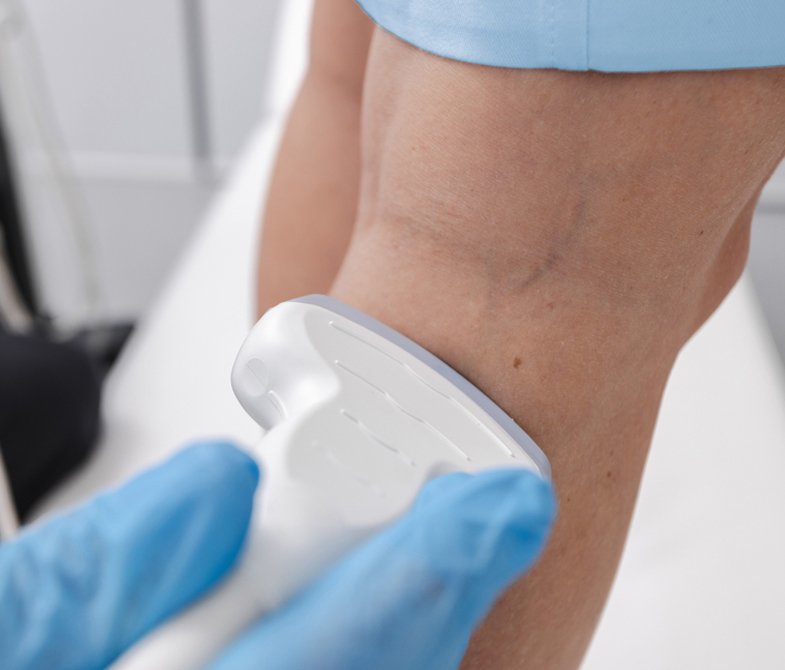
RFA is ideal for patients with varicose veins arising from reflux in the superficial venous system (for example saphenous veins) that cause cosmetic concern, discomfort, heaviness, swelling, or other symptoms. It also suits those seeking a minimally invasive option with shorter recovery compared with traditional surgery.
However, suitability depends on a full vascular assessment — including clinical evaluation and ultrasound — to identify which veins are refluxing, whether there are connections to deep veins, and any additional factors (e.g. clot risk, skin changes). Many specialist vein-clinics will combine RFA with other treatments (e.g. foam sclerotherapy) if needed.
Why Choose RFA — What It Means for Patients
- It offers an effective, evidence-based alternative to traditional vein stripping or ligation, with less pain and downtime.
- It improves appearance (reduces visible bulging veins) and helps relieve symptoms like leg heaviness, swelling or discomfort.
- It allows a rapid return to everyday life (outpatient, walking encouraged), minimal scarring, and relatively quick healing.
- It minimises risk when performed by trained vascular specialists under proper ultrasound guidance and aftercare protocols.
If you are considering varicose vein treatment — whether for cosmetic reasons or symptomatic relief — RFA offers a safe, proven pathway with excellent outcomes for many patients.
We are here to help
Please fill out the form below and a member of our team will be in touch as soon as possible.